


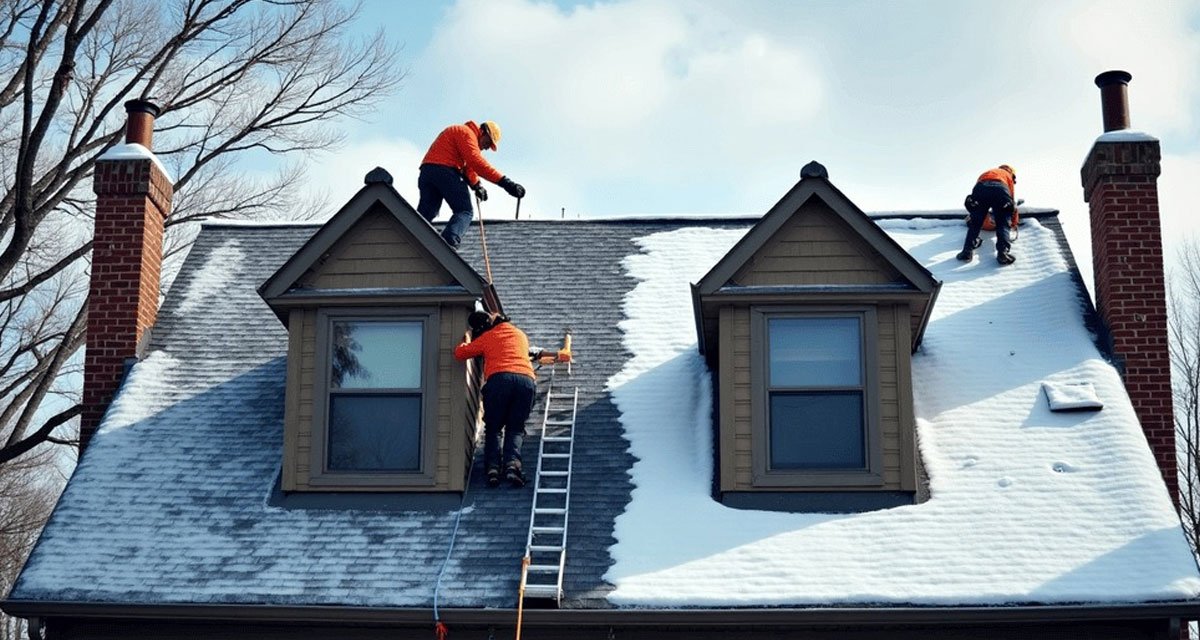
A failing roof isn’t just a maintenance headache — it’s a slow-motion disaster, and winter pulls the trigger. Ice loads, brutal wind, temperature swings that crack and warp whatever’s already weakened: the season punishes compromised materials without mercy. Most homeowners wait. They stall until something actually fails, then chase down a contractor in the middle of a cold snap. That scramble costs serious money. Getting the roof replaced before temperatures tank means solving problems before they find you.
1. Preventing Water Damage and Leaks During Heavy Precipitation
Winter precipitation doesn’t let up. Sleet one day, freezing rain the next, then another foot of snow on top. Cracked flashing, gaps in the underlayment, a few shingles that went missing last spring — water doesn’t need much of an opening. It finds every one. Moisture gets behind walls, soaks into attic insulation, and mold takes hold. Structural rot follows shortly after. The repair bill compounds fast.
A small October leak won’t stay small. That same intrusion, left alone, becomes rotted rafters and ruined insulation by March. A full replacement before the season starts gives you a complete barrier from the first snowfall — no patches, no hoping the storm skips your street. The interior stays dry. The panic doesn’t come.
2. Avoiding Ice Dam Formation and Related Roofing Problems
Here’s the basic mechanics: heat escaping through your roof deck warms the snow above it, which melts and runs toward the eaves — where it hits colder air and refreezes. That ridge of ice backs up meltwater and drives it under shingles. On a roof that’s already deteriorating? It doesn’t stand a chance.
New roofs change the dynamics entirely. Modern materials shed water more effectively than older ones. Proper installation accounts for ventilation and thermal consistency — which is exactly what breaks the freeze-thaw cycle responsible for dam formation. You’re not just buying shingles. You’re buying a system engineered to resist one of winter’s most destructive patterns.
3. Taking Advantage of Contractor Availability and Competitive Pricing
Once cold weather hits and emergency calls start stacking up, contractor availability collapses. Prices climb. The crew you actually want is booked weeks out — and meanwhile, your ceiling is already stained and the damage is spreading.
Schedule in fall and none of that applies. Roof replacement planned well ahead of winter lets you pull multiple quotes, compare without desperation, and pick a crew on merit rather than availability. Contractors can schedule your job efficiently, and that efficiency tends to show up in what they charge. Emergency rates are brutal. Pre-season rates aren’t.
4. Ensuring Proper Installation During Favorable Weather Conditions
Cold makes shingles brittle. Frost turns rooftops into slip hazards. Neither condition supports careful, thorough work. Adhesives and sealants need decent temperatures to cure correctly — push that process in January and long-term performance takes a hit before the job’s even finished.
Fall is genuinely different. Temperatures cooperate. Surfaces stay dry. Workers can move without risk and take the time to actually do the job right. That matters more than most people recognize — because installation quality determines how long a roof performs and how well it holds up under pressure. Better conditions, better outcomes. Simple as that.
Securing optimal weather variables can preserve structural integrity, and local knowledge ensures the project aligns with regional weather patterns. Homeowners who want a qualified local contractor can rely on the fact that Three Tree Roofing serves Kent with standard material installations. Planning your timeline carefully around seasonal shifts can help protect your home from premature wear and maximize structural durability before heavy winter storms arrive.
5. Improving Your Home’s Energy Efficiency Before Heating Season Begins
Old roofs bleed heat. Not all at once — steadily, through gaps and degraded insulation, week after cold week. The furnace compensates by running longer cycles. The utility bill reflects every one of them.
New materials with proper insulation cut that heat loss substantially. Replace before heating season and the savings start immediately. Not next spring. Right now, when it actually counts. Improved ventilation also stabilizes roof temperatures — which loops back to ice dam prevention. Two problems, one decision. The upfront cost is real, but so are the monthly savings accumulating every time the heat kicks on.
Conclusion
Five distinct advantages — water damage prevention, ice dam resistance, better contractor access, quality installation conditions, immediate energy savings. Each one is a legitimate reason to move before winter arrives. Stacked together, they’re hard to argue against. Homeowners who replace in fall aren’t just being cautious. They’re being smart — spending less, stressing less, heading into the coldest months with a roof that’s actually ready for what’s coming.