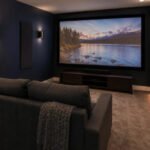



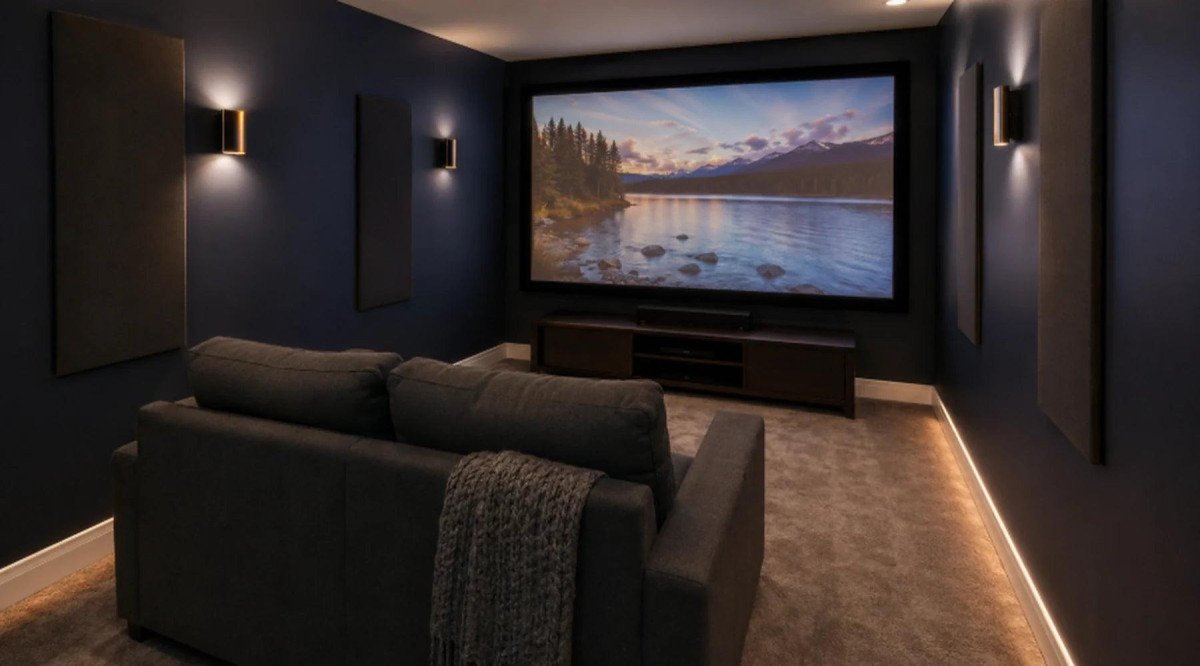
Last winter I wanted a way to watch films with the family without turning the living room into a second electronics store. The space is narrow, the ceiling is awkward to reach, and a big television would have eaten the only clear wall we have. What worked was treating the screen as something that appears when we want it and disappears when we don’t. A projector became the quiet tool in that plan, not the centerpiece, and the room stayed a room. Below is how the setup came together, including the few choices that actually mattered once the novelty wore off and real life moved back in.
Start With the Wall, Not the Screen
The first mistake is chasing brightness or resolution before measuring the room. In a small space, the distance from the couch to the wall sets the real limit, and most long-throw units need several feet of clear path to paint a usable picture. A cramped living room simply does not have that runway. That is where a short-throw model earns its place. A 4K 120Hz UST projector can rest a few inches from the surface and still throw an image large enough for the whole sofa to share.
The “UST” part stands for ultra short throw, which removes the ceiling mount, the long cable run up the plaster, and the tripod someone will trip over on the way to the kitchen. The 120Hz figure is the part that matters for fast scenes — sports, racing games, anything with quick motion — because a higher refresh keeps the image from smearing when the action speeds up. For a household that shares one room between movie nights and an ordinary Tuesday, placement is the decision that makes or breaks the whole idea, long before picture quality enters the conversation.
Once placement is settled, the wall itself deserves a look. A plain, light-colored wall often does the job for casual viewing, and a pull-down screen is a nice upgrade when the budget allows it. Flat paint beats glossy, since a sheen throws a hotspot back at the viewer. If the chosen wall has a window beside it, plan to draw the curtain before the marquee titles, because no device outruns direct sun. Ceiling height barely matters for a short-throw unit, which is a relief in older homes where the rooms are low and the wiring is a mystery. The picture size grows with how far the unit sits from the wall, so a few test placements on the cabinet tell you more than any calculator.
Bright Rooms Change the Math
Most living rooms are not caves. There are windows, lamps, and the kind of ambient light that flatters a space but quietly fights a picture. This is the part people underestimate when they read a spec sheet in a dark showroom. A dim lamp-style unit can look fine there and then wash out by the third evening at home. A 4K laser projector uses a light source built to hold its brightness across years of use, rather than fading the way older bulb models tended to.
The practical payoff is a steadier view without a recurring replacement chore hanging over it. Laser units also tend to warm up faster and keep a consistent white, which matters more than the numbers suggest when you are grabbing twenty minutes before bed. None of this turns a sunlit room into a theater — close the blinds for the big stuff — but it keeps the everyday picture from feeling like a compromise you made to save money.
Screen choice and room light work as a pair. A screen with a bit of gain helps in a brighter room, while a matte wall asks for a dimmer setting and a darker hour.
The cheap win is usually light control: a curtain, a lamp switched off, a seat angled away from the window. Spend there before spending on raw brightness, because the eye adjusts to the room faster than any gadget can outshine it. Color stays truer in a dimmed space too, so the film looks the way the people who made it intended, not the way a bright wall decides.
Sound You Can Live With
A picture is only half the experience, yet audio is where setups quietly get expensive. The temptation is a full surround system with wire run behind the baseboards, but a weekly film rarely calls for it. The soundbar already in the room, or even the television’s own speakers fed through the projector’s audio output, are enough for a weekly film.
The goal is to keep the space livable. Speakers that vanish into the furniture beat a rack of gear that announces itself whenever someone walks past. If the unit sits near a console, route the sound through whatever already lives there and skip the upgrade spiral. Good sound is the line between tolerating a film and enjoying it, but “good” and “complicated” are not the same purchase, and the second one tends to outlast the first.
Latency is not the worry people think it is for film. A small delay between mouth and voice is invisible once you are settled in, and the occasional game night is the only place it shows. For that, the higher refresh on a short-throw model already helps, so the audio side can stay simple without costing the experience. A separate subwoofer is a nice-to-have, not a requirement, and wireless rears are the kind of purchase that sounds essential until you realize the sofa already does the job. Keep the sound where the room already puts it.
Keep the Setup Out of the Way
The real luxury of this approach is that nothing permanent happens to the room. A short-throw unit on a low cabinet can slide into a drawer or a sideboard when company comes, and the wall goes back to being a wall. Set that against mounting a panel you then decorate around for the next decade. For renters, or anyone who rearranges with the seasons, that flexibility is the whole argument. The projector becomes a tool you bring out, like a good knife or a board game, rather than a fixture you defend at dinner parties. Our youngest still builds forts in front of the same wall on afternoons when the screen is put away, which tells you which choice aged better.
Ventilation is the one boring rule worth keeping. Projectors warm up, and the intake and exhaust need clear air. Do not tuck the unit into a closed cabinet with the door shut during use, and leave a hand’s width behind it. A warm device dims faster and complains sooner, so the easy habit is to set it down, leave it breathing, and put it away once the credits roll. The same portability makes it a travel item: it goes to a friend’s place or a weekend cabin far more easily than a wall-mounted panel ever could, which quietly extends its useful life past the living room.
Build a Routine, Not a Theater
The gear is the easy part. The habit is what sticks. We picked one night, kept the snacks simple, and let the format stay loose — sometimes a film, sometimes a long video essay, sometimes nothing and the room just stays normal. A projector makes a shared screen feel occasional, which is gentler than a television that begs for attention all day. The lifestyle win is not the image quality. It is that the living room still reads as a living room, and the movie is an event we choose rather than a glow we tolerate. That small shift is why the setup survived past the first month instead of becoming another dusty purchase.
Content sources stay simple too. A streaming stick or a laptop handles the library, and the projector just displays whatever arrives. There is no reason to build a media server for a weekly habit, and resisting that pull is part of keeping the room calm. Let the kids take a turn picking, because ownership is what turns a screen into a tradition. The screen serves the evening; the evening does not serve the screen.
A Few Practical Notes Before You Begin
Measure the wall you plan to use before ordering anything, and confirm an outlet sits within reach of where the unit will rest. Test the picture at the time of day you actually watch, not at midnight when the house is dark and forgiving. If the room catches afternoon sun, a blind does more for the image than any setting on the device. Keep cables along the floor edge or behind furniture so nobody trips during the opening credits. Be honest about expectations: a projector in a bright room will not match a dedicated theater, and pretending otherwise leads to a return, not a routine. Pick the wall, pick the hour, and let the rest follow.