

A home safe protects documents, jewelry, cash, and other items from fire, theft, and unauthorized access. The right choice of theft depends on more than its size or price. Prospective homeowners should research the building’s fire safety features, locking mechanisms, and installation requirements before entrusting their valuable possessions to a vendor.
These details determine how well a safe performs during an emergency and how easily household members can use it daily. Four checks deserve close attention before any purchase.
1. Fire Protection and Impact Resistance
Fire protection should match the items stored inside the safe. High internal temperatures can damage paper documents, even when flames do not enter the cabinet. A tested fire rating shows how long the safe maintains a safer internal temperature during exposure.
The inspected home safe collection describes two-hour models tested at an external temperature of 1,850°F. Their internal temperature remains at 350°F, and a grooved door seal helps block water from sprinklers or firefighting hoses. The collection also states that these safes carry a 30-foot impact rating.
For households comparing durable home safe storage, construction details deserve the same attention as capacity. A thicker door does not help if the safe cannot sit securely on the chosen surface. Weight, anchor points, and floor strength should be checked before delivery, particularly for upper-level rooms or older homes.
2. Construction and Storage Capacity
A safe’s walls, door, hinges, and internal layout affect both protection and usability. Thicker steel improves resistance to forced entry, while a heavy door makes removal more difficult. Buyers should inspect the stated dimensions, weight, shelf arrangement, and usable cubic capacity.
Storage needs should guide the size decision. A compact cabinet suits a few passports and small valuables, while a larger model accommodates folders, jewelry boxes, and several document envelopes. The collection includes a 1.24-cubic-foot home safe, which gives buyers a clear capacity reference.
People should measure the intended installation area before ordering. Door swing, baseboards, nearby furniture, and stair access can limit placement. A safe that fits its external dimensions still needs enough clearance for the door and enough space for regular access.
3. Locking Method and Access Control
The locking system should fit the people who use the safe and the risks it must address. Key locks work without batteries, but a misplaced key creates an access problem. Electronic locks provide code-based entry, while biometric systems use a registered fingerprint.
Buyers should check whether the lock includes emergency entry procedures, battery access, failed-entry limits, and a backup method. A digital keypad also needs a clear low-battery warning. These details matter because a secure lock must remain practical during an urgent situation.
Access control deserves careful thought in shared homes. A code should not appear in an obvious written location, and fewer authorized users reduce accidental disclosure. Children, guests, and service workers should not receive access unless their role requires it.
4. Installation, Security, and Daily Use
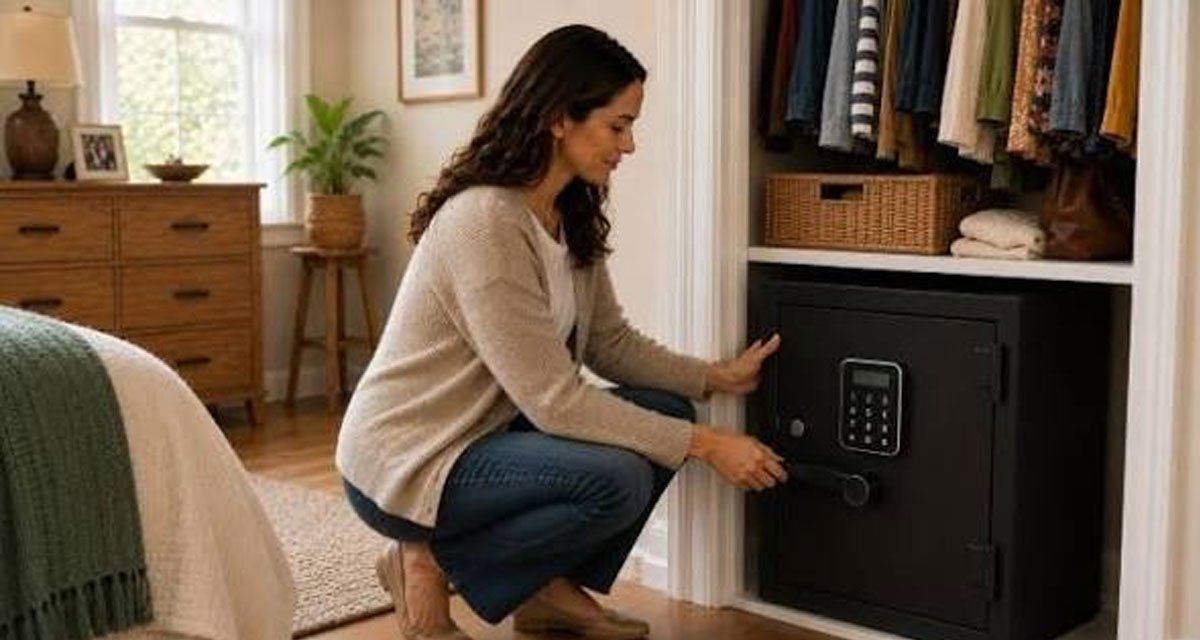
A home safe protects its contents more effectively when thieves cannot carry it away. Buyers should check whether the model includes mounting holes, anchor hardware, or installation guidance. A bolted safe is harder to remove than a cabinet resting loosely in a closet.
Placement also affects fire and theft protection. An interior room away from windows can reduce visibility, while a low position can make lifting more difficult. The final location should remain dry, accessible, and clear of heat sources.
The safe should support ordinary household routines. A document safe needs enough room for papers without folding them excessively. A jewelry safe needs compartments that prevent scratching and tangling. Firearms require a model and storage method that comply with applicable federal, state, and local requirements.
Buyers should also confirm delivery conditions before purchase. A heavy safe might require additional help, special equipment, or professional installation. Planning this step prevents damage to floors, walls, and the safe itself.
Conclusion
A reliable buying decision starts with the contents, then moves through fire performance, construction, lock access, and installation. Product descriptions should provide measurable details rather than vague security claims.
Buyers should measure the proposed location calculate the required storage space, and confirm how the safe will be anchored. Comparing those points across suitable models creates a practical shortlist and reduces expensive mistakes. The next step is to list every item requiring protection, then match that list to a safe’s tested specifications.