



An AC buzzing noise is an electrical buzz — a 60 Hz or 120 Hz vibration from a contactor, a capacitor, a transformer, or loose metal parts vibrating at a higher harmonic frequency. A buzz is different from a hum (smoother, lower frequency), a rattle (mechanical impacts), a click (switching), or a hiss (refrigerant or air). A buzz has an edge — a raspy, irritated quality — that says something electrical is vibrating when it should be solid, or arcing when it should be conducting.
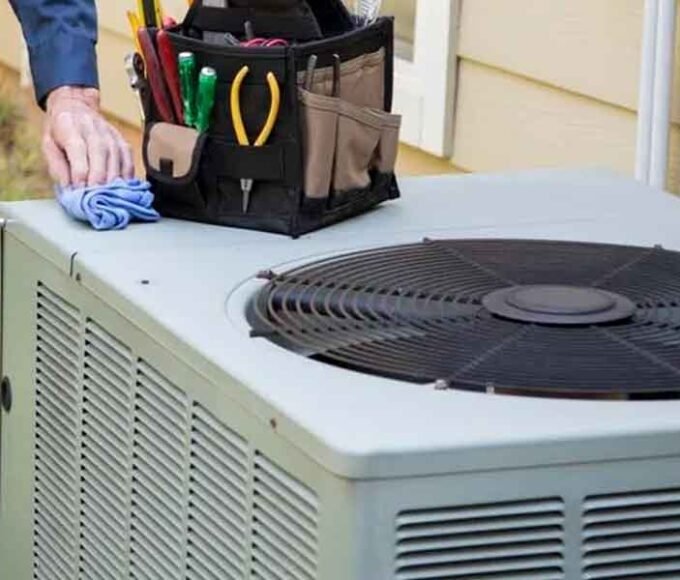
The outdoor condenser unit is the most common source of an AC buzz because it contains the contactor (a heavy-duty relay that switches 240-volt power), the capacitor (which can buzz when failing), and the compressor (which can produce an internal buzz from loose mounts or failing valves). A buzz from the outdoor unit when the thermostat calls for cooling, followed by the unit failing to start, is a failed capacitor or a chattering contactor. A buzz that is continuous and comes from inside the unit while it runs is the transformer or loose panels. A buzz with pops and crackles is electrical arcing — a fire hazard that requires immediate shutdown.
1. Contactor Chatter: The Machine-Gun Buzz
A chattering contactor produces a rapid brrp-brrp-brrp buzz — not a smooth tone, but a staccato vibration like a playing card in bicycle spokes. The contactor is opening and closing rapidly because its coil voltage is too low, the coil is failing, or ants have nested between the contacts and are preventing clean closure. The buzz is loudest at the outdoor unit’s electrical compartment. The compressor and fan try to start with each chatter but never reach full speed.
Turn the AC off immediately at the thermostat and the disconnect box. Each chatter cycle sends a pulse of locked-rotor current through the compressor windings without the compressor ever reaching running speed. The windings overheat rapidly. Contactor replacement costs $150 to $300. The compressor destroyed by running on a chattering contactor costs $1,200 to $2,500 to replace. Ants are the most common cause of contactor chatter — they are attracted to the electromagnetic field and nest between the contacts. After replacement, a dab of dielectric grease on the contacts prevents re-infestation.
2. Failing Capacitor: Loud Buzz, Compressor Won’t Start
A failing capacitor produces a loud 60 Hz buzz — louder and harsher than a normal hum — when the thermostat calls for cooling and the compressor tries to start. The capacitor cannot provide enough phase shift to start the motor. The compressor draws locked-rotor current and buzzes for several seconds until its thermal overload trips. The buzz stops. The overload resets. The buzz returns. Each buzz cycle is a failed start attempt that overheats the compressor windings.
The buzz-from-capacitor pattern is distinctive: the thermostat calls, a loud buzz for 3 to 10 seconds, then silence for several minutes, then the buzz returns. The outdoor fan may spin normally (if it is on a separate capacitor circuit), or it may not spin at all (if the dual capacitor has failed completely). Capacitor replacement costs $150 to $300. Do not keep resetting the breaker and forcing the compressor to try to start on a failed capacitor. The capacitor is a $20 part. The compressor it destroys is a $1,200 to $2,500 part.
3. Transformer Buzz: Continuous, Steady, from the Indoor Unit
A low, steady buzz from the indoor air handler or furnace that is present even when the system is idle is the 24-volt transformer. The transformer’s laminated steel core vibrates at 60 Hz, and if the laminations have loosened with age, the vibration produces a buzz instead of a smooth hum. The buzz is constant — it does not change when the system cycles on and off because the transformer is always powered when the equipment is on.
A transformer buzz that has been present since installation is normal and harmless. A buzz that is new, getting louder, or accompanied by a burning smell indicates the transformer is failing or the 24-volt circuit is drawing excessive current. A technician can measure the secondary current. If it is within the transformer’s rating (typically 40 VA), the transformer itself is failing and should be replaced ($150 to $300). If it is excessive, something on the 24-volt circuit — the thermostat, the contactor coil, or the control board — is drawing too much current and must be diagnosed.
Buzz vs. Hum — the quick distinction: A hum is smooth and low, like a refrigerator running in the next room. You feel it as much as you hear it. A buzz is raspy and irritating, like a fluorescent light with a failing ballast. If you can hear individual pulses within the sound — brrp-brrp — it is contactor chatter. If the sound is continuous and raspy, it is a transformer or capacitor. If the sound has pops and crackles, it is arcing and the power should be shut off immediately.
4. Electrical Arcing: The Dangerous Buzz with Crackles
An electrical arc produces a sizzling, crackling buzz — the sound of electricity jumping across an air gap at a loose wire connection, a burned terminal, or a failing contactor. Unlike the steady buzz of a transformer, an arcing buzz is irregular, with pops and hisses mixed in. The arc is intensely hot and erodes the metal surfaces, worsening the connection over time. Arcing inside an electrical panel, a disconnect box, or a condenser unit is a fire hazard.
If you hear a sizzling or crackling buzz from the outdoor unit, the disconnect box, or the electrical panel, turn the power off at the circuit breaker immediately. Do not open electrical compartments to investigate while power is on. Call an electrician or an HVAC technician. An arcing connection must be found, the burned wire cut back to clean copper, the terminal replaced, and the connection torqued to specification. This is a $200 to $500 repair when caught early. It is a house fire if ignored.
5. Loose Panels or Refrigerant Line Vibration
A sheet metal panel, a refrigerant line, or the outdoor unit’s top grille can vibrate against its neighbor at the compressor’s operating frequency or a harmonic. If the vibration frequency is 120 Hz or 180 Hz — multiples of the 60 Hz line frequency — the sound is a buzz rather than a hum. The buzz changes when you press on different parts of the unit.
Press firmly on the top grille, each side panel, and the refrigerant lines while the unit is running. The surface that stops buzzing when you press on it is the source. Tighten the panel screws. If a screw hole is stripped, use the next larger diameter screw or drill a new hole. For a vibrating refrigerant line passing through a wall penetration, slide a piece of foam pipe insulation into the gap. The foam absorbs the vibration. Do not use spray foam — it hardens and transmits vibration. A vibrating panel is a $0 fix with a screwdriver. A vibrating refrigerant line is a $5 fix with foam insulation.
FAQ: Common Questions About AC Buzzing
Why does my AC buzz loudly for a second when it starts?
A brief, loud buzz at startup — lasting 1 to 2 seconds, then fading as the compressor reaches running speed — is the contactor closing and the compressor starting against the pressure differential in the refrigerant lines. This is normal, especially on hot days when the head pressure is high. A startup buzz that has been present since installation and does not change is normal. A startup buzz that is getting louder, lasting longer, or is accompanied by the compressor failing to start is a failing capacitor or contactor.
My indoor unit buzzes but the outdoor unit is silent. What does that mean?
The indoor transformer is buzzing — it is powered continuously. The outdoor unit is not receiving the 24-volt signal to start, or it has lost power. Check the circuit breaker for the outdoor condenser. Check the disconnect box near the unit. If both have power, the contactor is not closing, or the control board is not sending the signal. The transformer buzz is normal. The silent outdoor unit is the problem.
A Buzz Is Electrical. Find It Before It Finds You.
An AC buzzing noise is an electrical component vibrating, chattering, or arcing. A chattering contactor buzzes rapidly and destroys the compressor. A failing capacitor buzzes loudly at startup and will fail completely. A transformer buzzes continuously and is usually harmless. Arcing buzzes with crackles and is a fire hazard.
Turn the unit off if the buzz is new, loud, or accompanied by the unit failing to start. The $150 contactor or $20 capacitor replaced today prevents the $2,500 compressor replacement tomorrow. If the buzz has crackles in it, treat it as an emergency.
This process allows the system to achieve higher annual fuel utilization efficiency scores, significantly lowering ongoing monthly utility bills compared to older heating configurations. Homeowners who monitor their utility bills closely often find that upgrading an outdated or underperforming setup can pay dividends in consistent seasonal comfort. To evaluate alternative setups, structural sizing requirements, and seasonal efficiency ratings for a home heating upgrade, continue reading for helpful indicators on choosing the right replacement layout.