



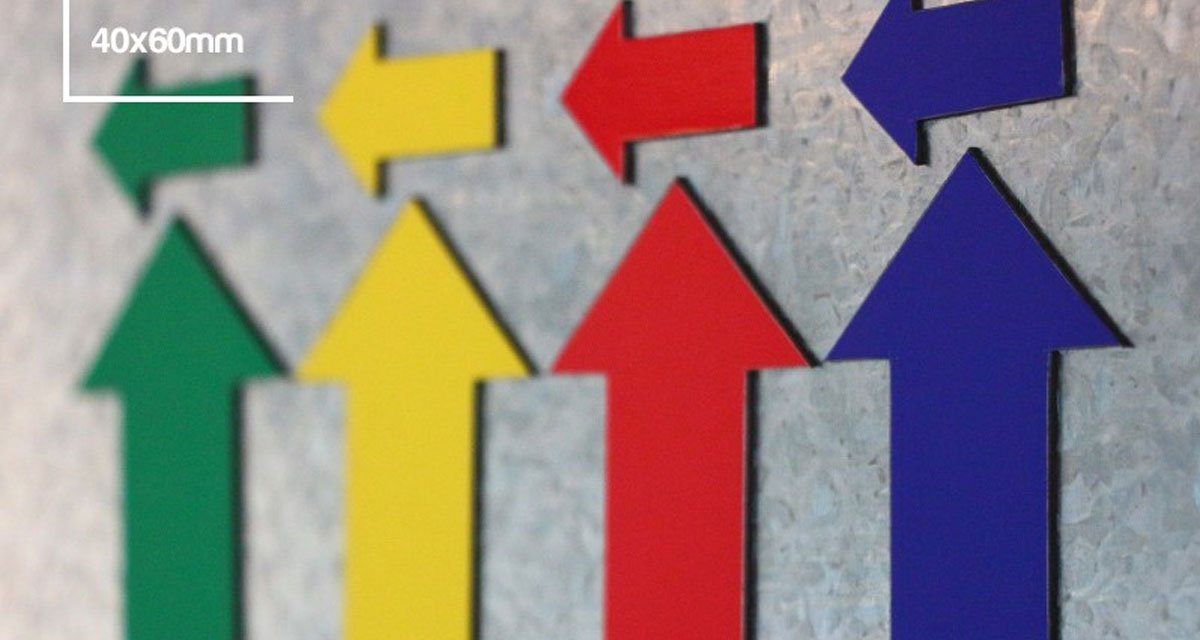
Directional signage succeeds when people grasp its meaning at a glance. That demand has grown as clinics, shops, event halls, and shared workplaces manage denser foot traffic. Clear arrows reduce hesitation because the eye reads movement before text. Over time, magnets cut in that familiar outline moved from novelty pieces into practical wayfinding tools. Their rise reflects a simple truth: people under time pressure respond best to signals that ask very little mental effort.
Form Beats Friction
Visual processing favors shape before wording when a turn must happen quickly. In corridors, service zones, and busy counters, that split-second cue matters more than extra explanation. The Arrow-Shaped Magnet fits this need because it joins an instantly recognized directional form with easy repositioning. Staff can place it on metal shelving, doors, carts, or cabinets, then shift it again as routes change during the day.
Road Logic Moved Indoors
Arrow symbols gained authority long before indoor wayfinding became common practice. Road networks trained drivers and walkers to treat pointed forms as immediate movement instructions. That habit later moved inside buildings. Visitors already understood what the symbol meant, so managers needed fewer words. A single arrow could guide restroom traffic, pickup lines, queue flow, or checkout routes without forcing people to stop and decode a long message.
Standards Built Trust
Public guidance rules strengthened that shared recognition. The Federal Highway Administration adopted the 11th edition of the Manual on Uniform Traffic Control Devices on December 19, 2023. Its effective date was January 18, 2024, and states had 2 years to adopt it. Consistent arrow use across travel systems reinforces memory through repetition. Because people see those forms so often, the same shapes feel trustworthy when they appear inside private facilities.
Temporary Routes Need Fast Tools
Many interiors change more often than visitors expect. Retail resets, school functions, clinic overflow plans, and seasonal displays can redirect movement within hours. Permanent signs rarely keep pace with that churn. Magnets fill the gap because teams can reposition them without drilling, peeling residue, or ordering replacements. That flexibility reduces setup time and waste. It also helps staff respond fast when an entrance closes or a corridor needs temporary redirection.
Retail Found a Simple Answer
Stores depend on directional clarity more than shoppers may notice. A weekend promotion can shift aisles, display tables, and pickup stations before doors open. Arrow magnets help teams guide movement without rebuilding the full sign system. Their form stays readable from several angles, and their compact size suits crowded fixtures. That balance matters in selling spaces where shelves, price tags, and product cards already compete for visual attention.
Healthcare Uses Demand Calm
Medical environments need guidance that lowers strain rather than adding more noise. Patients often arrive with stress, pain, time pressure, or unfamiliarity with the building. A short directional cue can reduce confusion near reception, treatment rooms, or vaccine stations. Magnets also support cleaning routines because staff can update routes without sticky residue on equipment or doors. In settings where a wrong turn can delay care, a clear arrow often says enough.
Events Reward Flexibility
Conference centers, school gyms, and community halls often change function several times in one day. Morning registration may shift to afternoon seating, then to evening pickup. That pace favors signage that moves with the room. Arrow magnets let crews redirect visitors quickly while keeping surfaces tidy. Reusable markers also help budgets. Rather than printing fresh temporary boards for each layout, organizers can reuse the same pieces across many different setups.
Materials Help the Shape Last
Material performance helped these magnets gain wider use. Magnetic backing holds firmly on steel surfaces, while printed faces can carry strong contrast and protective coatings. Those traits matter in warehouses, back rooms, and covered outdoor areas. Paper tends to curl. Tape can lose adhesion. Lightweight stands may tip. Magnets stay flat on doors, racks, cabinets, and appliances, which keeps the directional message visible through repeated handling.
Data Supports Graphic Guidance
Research on wayfinding continues to support graphic cues. A 1991 building navigation study found that symbol-based signage improved travel speed, while text-heavy systems increased the number of wrong turns. Later transit work showed that the viewing angle strongly affects legibility. Another station study reported that 62% of people struggled to find their way, and 34% became lost. Those findings help explain the staying power of a bold arrow.
Conclusion
Arrow-shaped magnets became common because they solve a practical wayfinding problem with unusual efficiency. They borrow familiarity from public sign systems, adapt to changing interiors, and remain easy to place or remove. Their value comes from function, not novelty. As buildings continue shifting use, people still need guidance that reads at a glance. For many teams managing visitor flow, the simplest answer remains a clear arrow fixed to a movable magnetic surface.