



There is no single best mini split system for homes, but there is a repeatable way to choose one: match the indoor unit and zone layout to the room layout, the heat-or-cool function to the climate, the capacity to the room size and its heat loads, the voltage to the electrical panel, the filter to your air-quality needs, and the brand to a budget with a warranty you can reach. Most U.S. homes should compare heat pump models, which cool and heat, against cooling-only versions, which cost less but lock out heating. The framework below walks the decision in order and names the tradeoff at every step, so the system that survives the filter is the one that fits your house rather than the one that fits a ranking.
An addition, a room that central air cannot reach, a house without ducts, or a whole-home alternative to window units: each of these starts from the same six questions, and the install and repair guides on this site cover the work once the system is picked.
Choosing the Best Mini Split Systems for Homes
Work through six questions in order: room layout, climate, capacity, electrical fit, filtration need, and warranty. The table below maps common home conditions to the configuration that fits them, with the tradeoff named for each, so a one-room fix and a whole-home retrofit land in different columns rather than the same list.
| Your home condition | Configuration that fits | Who it suits | Main tradeoff |
|---|---|---|---|
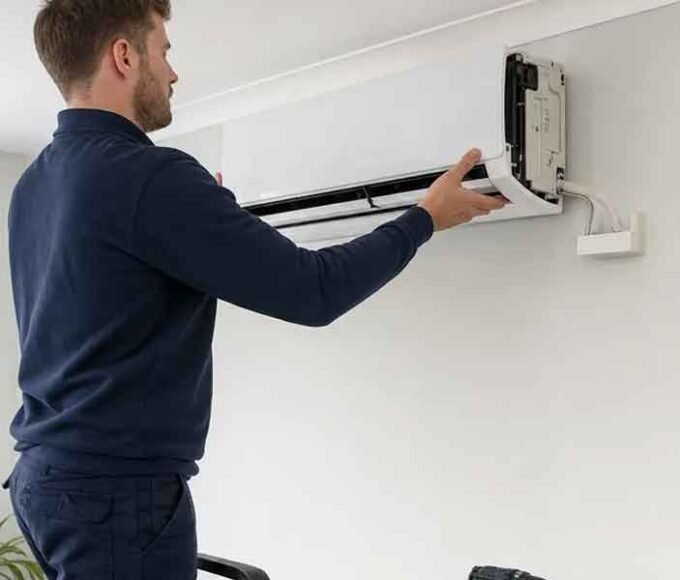
| One problem room, addition, or garage | Single-zone wall mount | The cheapest entry into mini splits; simplest install and sizing | One room only; no heating help elsewhere in the house |
| Several rooms, no ductwork | Multi-zone: one outdoor unit, several indoor units | Homes cooling or heating multiple rooms without running ducts | Outdoor unit capacity is the ceiling for the whole layout |
| Clean look, rooms you want hidden | Ceiling cassette or ducted (concealed) indoor unit | Drop ceilings, or owners who do not want a visible wall unit | Higher install cost and less service access |
| Sloped attic or low-wall room | Floor console | Spaces where a high wall mount is not feasible | Uses floor space; airflow can be blocked by furniture |
| DIY route on a budget | DIY kit with factory-prefilled lines | Handy owners comfortable mounting both units and pulling a line set | Refrigerant work and the high-voltage hookup still need professionals |
Consumer Reports tested 10 wall-mounted models and found most homes need professional installation, with a dedicated electrical line for the system. The same report recommends getting three bids and asking which manufacturer the installer actually services, because many pros specialize in one brand. If the labor side of the math matters to you, the air conditioning installation cost calculator prices that side of the decision separately.
The layout question settles first because it decides cost and capacity. A single-zone system is the simplest install and the easiest to size. A multi-zone system spreads the largest single cost, the outdoor unit, across several rooms, but its capacity is the ceiling for everything attached to it.
Climate and the Heat-Pump Question
Most U.S. homes should compare heat pump mini splits, which cool in summer and heat in winter, against cooling-only models, which cost less but lock out heating. The climate decides which belongs on your shortlist, and the spec sheet, not the category name, tells you how a model performs in cold weather.
Mini splits are heat pumps: they move heat from indoor air to the outside in summer and reverse direction in winter. A heat pump version can supplement a furnace in cold climates and replace it entirely in mild ones, which is why the heat-pump question comes second in the filter, right after the room layout.
Cooling-only models are simpler and cheaper, and they are a reasonable fit in climates that never need heat. In most of the U.S., the heat pump version costs only a little more at purchase and covers the shoulder seasons, so it is the default to compare against.
The cold-climate answer lives in the rating, not the marketing. Look at the low-temperature heating capability and the HSPF2 number on the model’s AHRI record, and check whether the manufacturer publishes a heating capacity at low outdoor temperatures. That spec, not the product name, is what tells you whether the unit holds up in your winters.
Sizing, Efficiency, and the Electrical Fit
Size the unit by BTU against the room’s square footage plus its heat loads, compare SEER2 and HSPF2 on the same AHRI record, and check the voltage before you buy. Consumer Reports’ tested 12,000 BTU units covered about 350 to 550 square feet, and common sizes run from 9,000 to 24,000 BTU and up.
Square footage is the starting point, not the whole answer. High ceilings, open doorways, a kitchen nearby, and strong sun exposure all add heat to a room, so an installer sizes against the space as it is used, not just the floor plan. Oversizing is a real mistake: a unit that is too large short-cycles and dehumidifies poorly.
Efficiency comparisons only mean something on the same scale. SEER2 covers cooling, HSPF2 covers heating, and the AHRI directory is the neutral place to pull both for any model, brand-name or not. That certificate matters before purchase for a second reason: many utility rebates and cold-climate heat pump programs require an AHRI record to qualify.
“Costway, Garvee etc. check for AHRI certificate and hopefully has UL listing I wouldn’t buy anything without an AHRI certificate because all the specs can be fake.”
– r/DIYHeatPumps, August 2026 (10 upvotes)
The AHRI directory is searchable by model number, so the check takes a minute once you have a shortlist.
The voltage question is an electrical-fit question, not a blanket rule. Larger systems need a dedicated 220-volt circuit, while smaller units can run on 110-volt household circuits, and the cheaper option depends on what your panel and existing wiring already support. Consumer Reports notes that every mini split should have a dedicated electrical line regardless of voltage, which is part of the install cost, not an afterthought.
Filtration, Maintenance, and the DIY Boundary
Plan for filtration and maintenance before you install, and draw the DIY line at the refrigerant circuit and the high-voltage hookup. Filters need cleaning or replacement on a schedule, annual maintenance protects the warranty, and EPA Section 608 certification is required for anyone who opens the sealed refrigerant loop.
Mini splits filter the air that passes through the indoor unit, and the filter is a washable or replaceable panel that sits behind the front cover. Match the replacement to what the unit actually takes, not to the highest MERV number on the shelf, because a filter the blower cannot pull air through just starves the system. Filter pricing and the full cost picture live in the hvac filters cost guide.
Maintenance is mostly cleaning and inspection: the washable filter, the condensate drain, the outdoor coil, and the fan. Skipping it shows up as reduced airflow, higher bills, and eventually a repair call, and the hvac maintenance benefits guide lays out what a routine visit actually covers.
On the repair side, mini splits fail on components like any heat pump, and the sealed circuit stays with EPA-certified technicians under Section 608 of the Clean Air Act. When a system stops cooling or heating, the repair-cost picture in the ac repair how much does it cost guide applies to mini splits the same way it applies to central systems.
Indoor air quality is part of the same decision. A mini split conditions the air in the rooms it serves, and it does not move air through ductwork, so it solves some indoor air problems and leaves others untouched. The common indoor air quality problems guide covers which ones are duct-related and which are not.
The DIY boundary is the same for every mini split brand. A homeowner can mount both units, run the line set, and connect the condensate drain, but the sealed refrigerant circuit requires EPA-certified handling and the high-voltage wiring is licensed-electrician territory. DIY kits with factory-prefilled lines remove the vacuum step, yet the electrical hookup and the final system check still belong to a professional.
Brand choice splits into two lanes. Installers in the r/hvacadvice thread list Mitsubishi and Daikin at the top of their own order, and the same thread warns that unknown budget names are usually rebranded units from Gree or Midea without the support and warranty help of the original maker.
“1. Mitsubishi 2. Mitsubishi 3. Mitsubishi 4. Daikin”
– r/hvacadvice, July 2026 (22 upvotes)
The practical reading is to check who actually makes the unit before buying, because the OEM behind the name decides parts availability and warranty service, then match the brand to the budget you can defend. A unit from a reputable manufacturer can last about 10 to 15 years, and the AHRI record is the quick way to confirm the model exists and is rated as advertised.
Best Mini Split Systems For Homes FAQ
Which brand of mini split is considered the most reliable?
Mitsubishi and Daikin lead the professional consensus, with Fujitsu also common in the conversation. The reliability conversation in installer forums names those brands first, but the more useful filter is to check who makes the unit and whether the AHRI record and warranty service are reachable.
What brand mini split should I avoid?
No brand is universally bad, but the community warns that unknown budget names are usually rebranded units with thin support and warranty service. Check the AHRI certificate and the UL listing before buying, because those documents confirm the model exists and the specs are real.
What are the best mini split systems for homes in 2026?
Consumer Reports’ tested models range from about $799 to more than $1,860 before installation, with Mitsubishi, Daikin, Fujitsu, and MrCool among the names tested. The best one for your home depends on the layout, climate, capacity, electrical fit, filtration need, and warranty.
Is it cheaper to run a 110 or 220 mini split?
Larger mini splits need 220-volt power, and smaller units can run on 110-volt household circuits. The cheaper option depends on the unit size and the electrical work already in your home, not on a blanket rule.
Run the six questions in order, let the warranty settle the brand, and the system left on your shortlist is the one worth quoting. The wider Home Improvement guides on this site keep the related HVAC projects in one place.