

The Australian commercial cleaning services market is experiencing significant expansion. Valued at approximately $14 billion, the industry is projected to grow steadily over the next decade. However, the most lucrative opportunities for service providers lie in a specific, high-growth niche: eco-friendly cleaning. With the green cleaning market expected to grow at over 12 percent annually, scaling a commercial cleaning business requires a strategic shift toward sustainability. Institutional and commercial procurement now accounts for roughly a third of all cleaning product demand in Australia. This presents a massive opportunity for business owners who can provide effective, non-toxic services to corporate offices, educational facilities, and healthcare centres. By adapting your business model to meet this demand, you can secure long-term, high-value contracts.
Align with Corporate ESG Goals and Indoor Air Quality Standards
To successfully scale your operations, you must understand what drives your commercial clients. Corporate Environmental, Social, and Governance (ESG) reporting is increasingly pushing landlords and enterprise tenants to mandate sustainable cleaning practices in their facility management contracts. Facility managers are actively looking for partners who can help them meet strict environmental targets, rather than just providing a superficial clean that relies on heavy chemical use.
One major factor in this shift is the National Australian Built Environment Rating System (NABERS), which features a prominent Indoor Environment rating. This metric evaluates indoor air quality, a factor directly impacted by the volatile organic compounds (VOCs) released by traditional cleaning chemicals. Harsh chemical exposure can contribute to respiratory irritation and sick building syndrome in office environments, which in turn leads to higher employee absenteeism. Conversely, optimising indoor air quality by lowering chemical exposure has been shown to significantly boost occupants’ cognitive function scores. Positioning your cleaning business as a direct solution to these air quality challenges is a powerful sales strategy when pitching to major enterprise clients.
Swap Harsh Chemicals for Natural Innovations
The core of any green cleaning business is its product inventory. Many operators mistakenly believe that natural products are less effective, but modern plant-based science proves otherwise. For example, chlorine bleach is fundamentally ineffective at permanently removing mould from porous surfaces like commercial restroom tiles. It merely bleaches the colour of the spores while leaving the deep root network intact to regrow, forcing your staff to repeatedly treat the same problem areas. Instead, forward-thinking businesses are turning to natural alternatives like clove and tea tree oils. Clove oil contains eugenol, an antifungal compound that actively disrupts fungal cell membranes and kills colonies at the root. When treating these common damp areas, incorporating a plant-based grout mould remover prevents regrowth while avoiding the harsh chlorine fumes that can trigger respiratory issues in enclosed bathrooms. By replacing outdated, toxic chemicals with scientifically sound natural formulas, your team can deliver superior, long-lasting results. This not only improves client satisfaction but also reduces the long-term cost of constantly reapplying ineffective conventional treatments.
Implement Standardised Green Cleaning Protocols
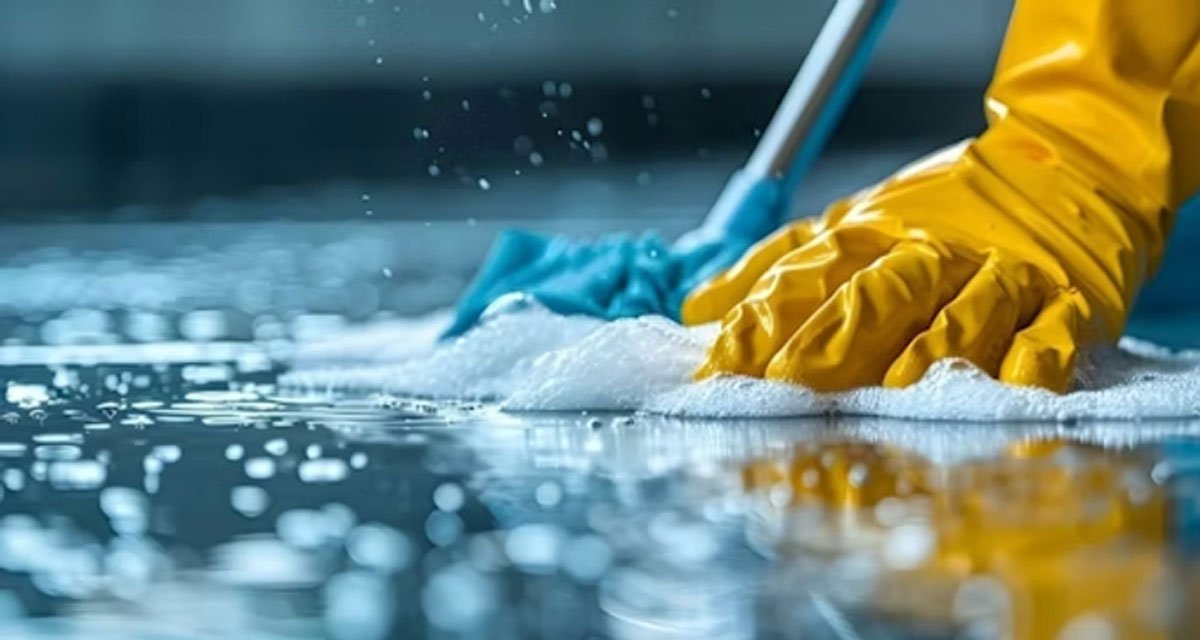
Scaling a business requires repeatable, efficient systems. When transitioning to sustainable practices, you must train your team on specific protocols that maximise the efficacy of natural ingredients. Moving away from a single-step harsh chemical spray to a more methodical, natural approach ensures high-quality results across all your commercial contracts. Furthermore, natural cleaning protocols often improve staff retention, as cleaners appreciate working without exposure to toxic fumes and skin irritants.
Consider adopting the following standardised practices for your cleaning crew:
Utilise a two-step natural protocol for challenging areas. This might involve using a mild acid like white vinegar for a first-pass surface clean, followed by a targeted essential oil application for deep sanitation.
Invest in high-quality microfibre technology to trap dirt and microbes mechanically. This drastically reduces the overall volume of liquid cleaning solutions required and speeds up drying times.
Implement strict colour-coded equipment systems to prevent cross-contamination between different commercial zones (such as office spaces, restrooms, and kitchen areas).
Ensure all staff are continuously trained in correct dilution rates to minimise product waste and prevent environmental runoff.
Leverage Third-Party Certifications to Avoid Greenwashing
As the demand for eco-friendly services grows, so does the prevalence of greenwashing in the commercial cleaning sector. To build trust with large corporate clients, your marketing must be backed by substantiated data rather than vague terms like “earth-friendly” or “all-natural.” Updated Australian ecolabel standards now penalise businesses that use unsubstantiated green marketing, making transparent communication more important than ever.
This is where formal environmental credentials become an invaluable tool for scalable growth. Good Environmental Choice Australia (GECA) operates under strict ISO principles, providing a recognised benchmark for products that meet rigorous human health and environmental criteria. By exclusively utilising GECA-certified or scientifically proven natural solutions, your cleaning business can directly help clients earn critical credit points for the Green Building Council of Australia’s Green Star Performance tool or WELL Building Certifications. Winning these tenders allows you to rapidly expand your market share.
Scaling a green commercial cleaning business in Australia requires more than just swapping out a few bottles on the cleaning cart. It demands a deep understanding of corporate sustainability goals, an unwavering commitment to indoor air quality, and the implementation of scientifically backed natural protocols. By aligning your commercial services with these modern market expectations, you can easily differentiate your brand, secure high-value facility contracts, and build a highly profitable, sustainable enterprise.