


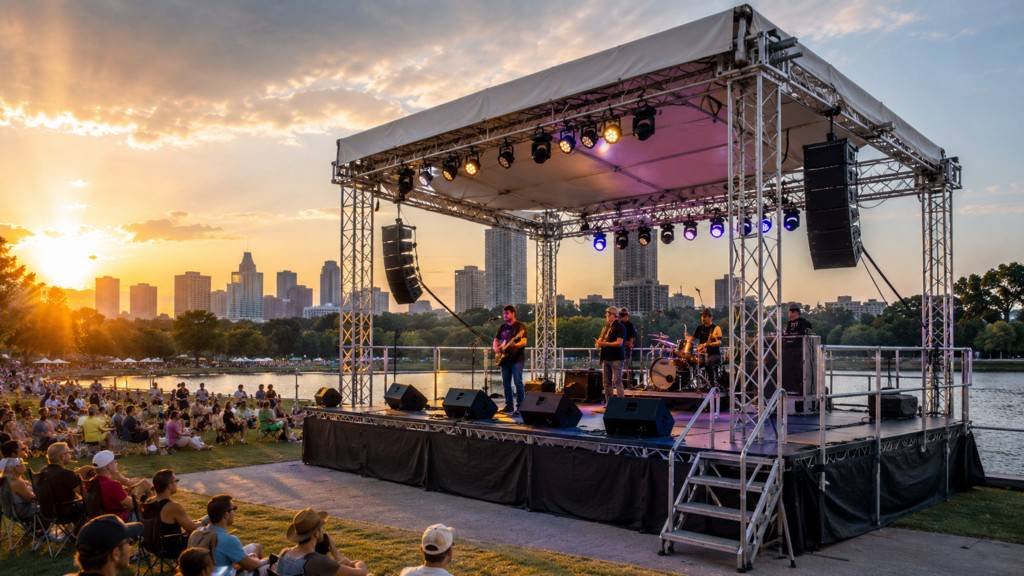
Outdoor events create memorable experiences for audiences, performers, and organizers alike. However, hosting live performances outside also introduces a wide range of logistical and structural challenges that are often underestimated during the planning process. From uneven terrain to weather exposure and lengthy setup times, organizers must balance convenience, safety, appearance, and budget when preparing for a successful event.
One of the most common concerns during event planning is selecting the right concert stage solution. Many organizers are now turning to a portable stage system because it offers flexibility and efficiency that traditional fixed platforms may lack. While these modular systems are not perfect for every scenario, they can address several recurring issues associated with outdoor performances.
Uneven Ground and Surface Instability
Outdoor venues rarely offer perfectly level surfaces. Parks, parking lots, fields, beaches, and temporary festival spaces often contain slopes, soft ground, gravel, or uneven pavement. These conditions can create stability problems that affect performer safety and audience confidence.
Adjustable modular platforms help reduce these concerns by allowing height modifications that compensate for irregular terrain. This creates a more balanced performance area without requiring extensive ground preparation.
However, there are trade-offs involved. Lightweight systems are easier to transport and assemble, but heavier structures may provide greater stability for large-scale productions involving heavy equipment or extensive lighting rigs. Event planners must carefully evaluate the expected load capacity and environmental conditions before choosing a setup.
Long Setup and Teardown Times
Traditional outdoor staging systems often require specialized crews, large transportation vehicles, and significant labor hours. Delays during assembly can increase staffing costs and reduce preparation time for sound checks, rehearsals, and technical adjustments.
Modular event platforms simplify the process by using foldable sections and tool-free assembly methods. Smaller crews can typically complete installation faster, making them especially useful for community events, touring acts, schools, and temporary festivals.
The challenge lies in balancing speed with structural complexity. Faster deployment systems may not always support the advanced production requirements of major entertainment events. Organizers hosting large audiences must determine whether convenience outweighs the need for highly customized staging configurations.
Transportation and Storage Limitations
Many event companies and organizations operate with limited storage space and transportation budgets. Large permanent structures often require trailers, warehouse storage, and dedicated handling equipment, which can significantly increase operating costs over time.
Compact staging systems reduce these logistical burdens by folding into manageable sections that fit into smaller vehicles or storage areas. This flexibility is especially beneficial for organizations that host recurring events at different locations throughout the year.
Still, portability can sometimes involve compromises in platform size or accessory compatibility. Larger productions may require additional extensions, guardrails, stairs, or support components that increase overall transportation needs.
Weather-Related Challenges
Outdoor events are highly vulnerable to changing weather conditions. Rain, wind, heat, and moisture can affect structural integrity, electrical equipment, and performer safety.
Modern modular platforms are often designed with weather-resistant materials and anti-slip surfaces that improve reliability in unpredictable environments. Elevated performance areas also help reduce problems caused by wet grass or muddy ground.
Despite these advantages, no outdoor structure is completely weather-proof. High winds may still require additional anchoring systems or event delays. Organizers must balance cost considerations with the need for weather preparedness and emergency planning.
Audience Visibility Problems
A poorly elevated performance area can negatively impact audience engagement. When viewers cannot clearly see performers, overall event satisfaction declines regardless of sound quality or entertainment value.
Adjustable-height systems allow organizers to improve sightlines for standing crowds, seated audiences, or sloped viewing areas. This flexibility is particularly valuable for festivals, public ceremonies, and multi-purpose community gatherings.
However, increasing elevation introduces additional safety requirements. Higher platforms may require reinforced supports, railings, and stair access that add complexity and expense to the overall setup.
Budget Constraints and Rental Costs
Outdoor events can quickly become expensive when organizers repeatedly rent staging equipment for multiple performances throughout the year. Purchasing reusable modular systems may reduce long-term costs for organizations that host frequent events.
At the same time, ownership introduces new responsibilities such as maintenance, transportation, storage, and inspections. Smaller organizations may find rentals more practical despite the recurring expense. The decision often depends on event frequency, staffing availability, and long-term operational goals.
Safety and Compliance Concerns
Safety remains one of the most important factors in outdoor event planning. Structural failures, unstable surfaces, and overcrowding can create serious risks for performers, crew members, and attendees.
Professional-grade modular systems are typically engineered to meet weight and safety standards, but proper installation remains essential. Even high-quality equipment can become hazardous if incorrectly assembled or overloaded.
Event organizers must balance affordability with reliability. Lower-cost alternatives may reduce upfront spending but increase long-term risk if they lack durability or certification standards.
Choosing the Right Outdoor Performance Solution
There is no single staging solution that works for every outdoor event. Smaller community gatherings may prioritize portability and fast setup, while large festivals may focus more heavily on load capacity, customization, and production support.
The best approach depends on several interconnected factors, including:
- Audience size
- Venue conditions
- Transportation access
- Weather exposure
- Budget limitations
- Safety requirements
- Frequency of use
Carefully evaluating these considerations helps organizers select equipment that aligns with both operational needs and audience expectations.
Wrapping Up
Outdoor performances present unique logistical and structural challenges that require careful planning and practical decision-making. Uneven terrain, weather exposure, transportation limitations, and safety concerns all influence the effectiveness of an event setup.
Modular staging systems provide a flexible solution for many of these problems by improving portability, reducing setup time, and adapting to different environments. However, organizers must also consider the trade-offs between convenience, durability, scalability, and cost before making an investment.
By understanding these challenges and evaluating the available options objectively, event planners can create safer, more efficient, and more engaging outdoor experiences for performers and audiences alike.